Why Your Breaker Keeps Tripping
Covered In This Article:
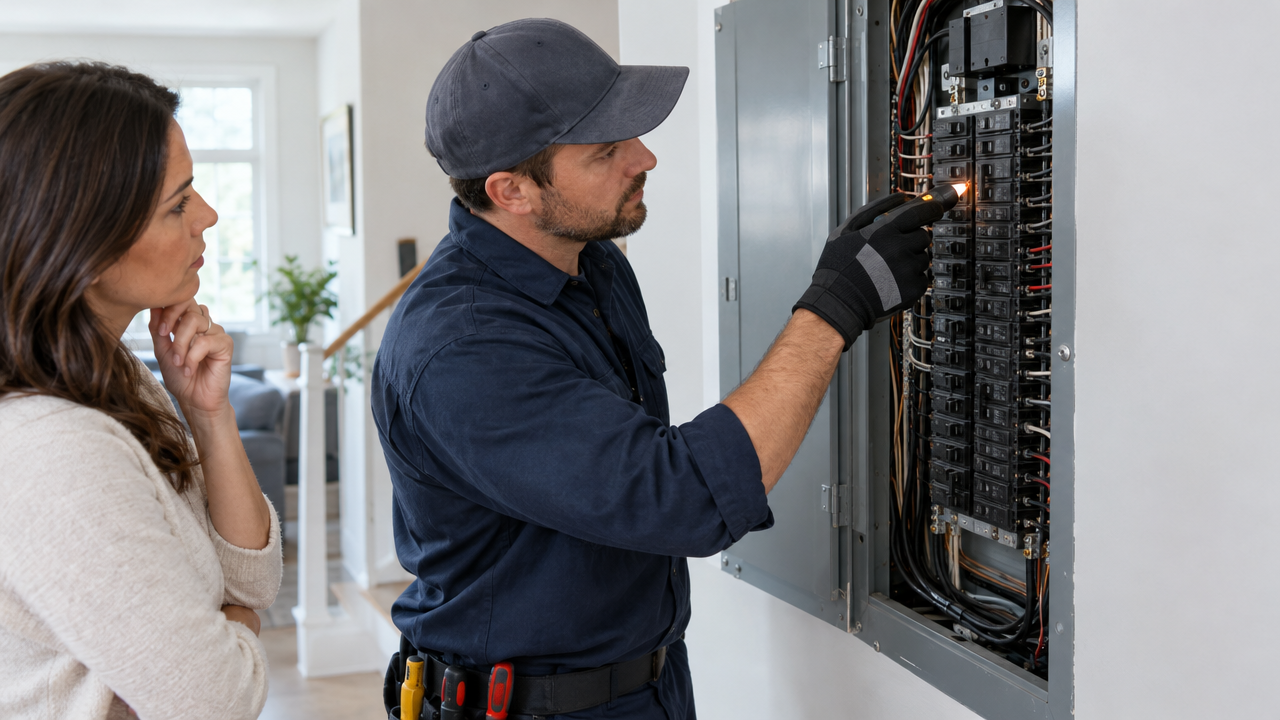
Request an Electrical Appointment. If you are dealing with any electrical issues, do not wait. Small electrical problems can turn into safety risks. Speck Family Electric makes it simple to get a fast, professional inspection. Fully licensed and insured, with customer-first service and straightforward next steps.
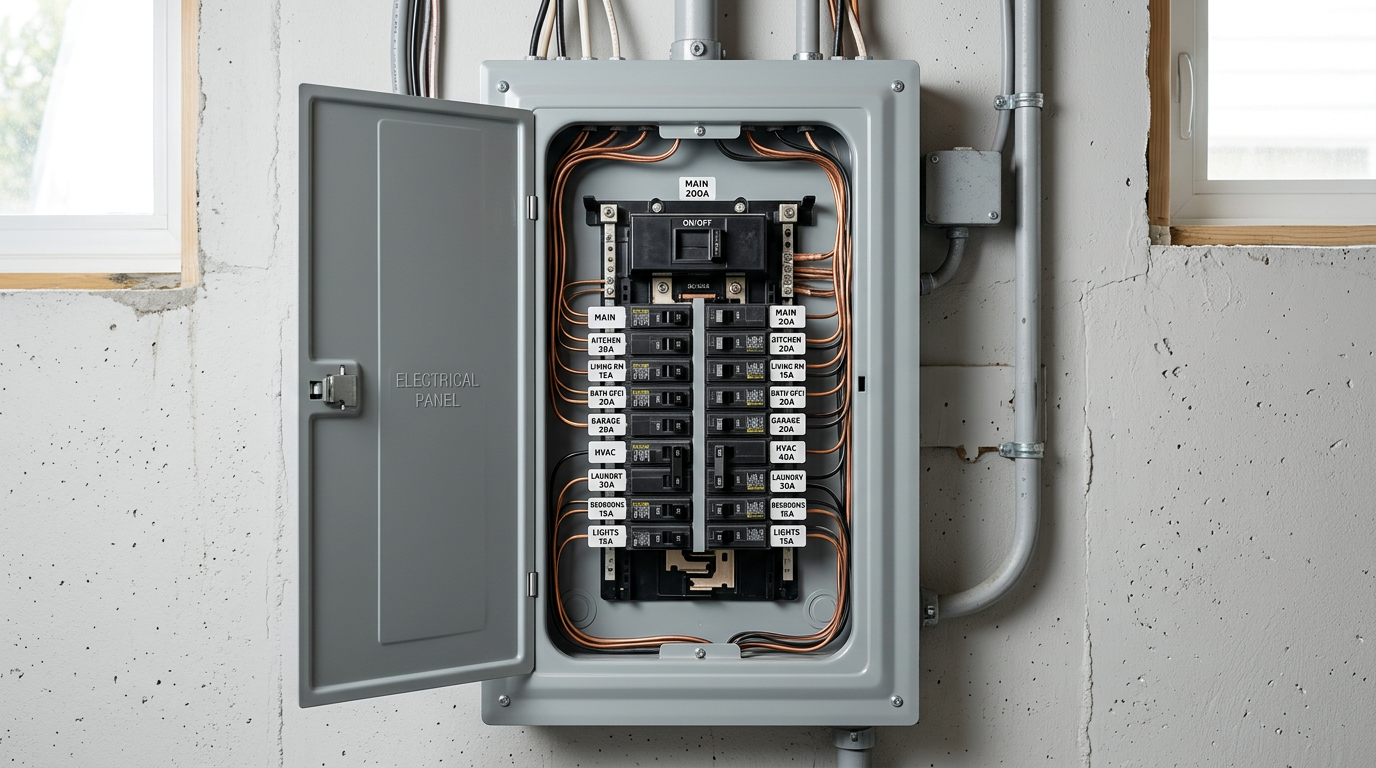
It is a frustrating situation every homeowner faces eventually: you turn on a vacuum cleaner, microwave, or portable heater, and suddenly the room goes dark. You walk to the garage or basement, flip the circuit breaker back on, but minutes later, click, it trips again.
While it is tempting to keep flipping the breaker back on, a tripping breaker is actually a critical safety feature doing its job. It trips to prevent electrical fires caused by overheated wiring inside your walls.
Quick Diagnosis Checklist
Before calling an electrician, run through this quick mental checklist:
1. Did the breaker trip immediately after plugging in a specific appliance?
2. Is there a space heater, toaster, or microwave sharing the same circuit?
3. Does the breaker trip instantly upon resetting, or does it take several minutes?
4. Do you notice a burning smell, warm wall plates, or buzzing outlets?
5 Common Causes of Tripping Breakers
1. Circuit Overload (Most Common): A circuit overload occurs when you request more electrical current than the wiring can safely carry. For example, running a 15-amp space heater and a 10-amp vacuum cleaner on a single 15-amp branch circuit causes the thermal switch inside the breaker to pop open.
2. Short Circuit (Dangerous): A short circuit occurs when a hot wire comes into direct contact with a neutral wire. This causes an instantaneous surge of massive electrical current, generating extreme heat and electrical arcing.
3. Ground Fault: Similar to a short circuit, a ground fault happens when a live hot wire touches a grounded portion of an outlet box, bare copper ground wire, or appliance housing. Ground faults are particularly hazardous in moist locations like kitchens, bathrooms, and outdoor outlets.
4. AFCI / GFCI Nuisance or Arc Tripping: Modern Arc Fault Circuit Interrupters (AFCIs) monitor wire waveforms for dangerous sparking (arcing). Worn appliance motors or damaged extension cords can trigger sensitive AFCI breakers even without a full circuit overload.
5. Aging or Damaged Breaker Hardware: Circuit breakers contain mechanical springs and bi-metallic strips that weaken over years of heat cycles. An old breaker can become weak and trip at much lower amperages than its rated capacity.
Red Flags That Need IMMEDIATE Professional Attention
Stop resetting your breaker immediately and call a licensed electrician if you notice:
-A burning plastic or rubber odor near outlets or the breaker box.
-Discoloration, scorch marks, or soot around outlet slots or breaker switches.
-Sizzling, popping, or crackling sounds inside wall cavities.
-A breaker switch that feels hot to the touch.
Safe Guidelines: What NOT to Do
NEVER force or tape a breaker switch in the ON position: Forcing a breaker closed bypasses internal fire protection, quickly overheating wall wiring until insulation melts and ignites.
NEVER replace a 15-amp breaker with a 20-amp breaker: Breaker size must match wire gauge. Installing a larger breaker on thin wiring creates a major fire hazard.
Frequently Asked Questions
-
Should I keep resetting the breaker? No. Resetting a breaker once is fine to rule out a temporary surge. If it trips a second time, leave it off until a professional electrician diagnoses the underlying electrical issue.
-
How do GFCI/AFCI interactions affect nuisance trips? Certain older motor appliances (like older treadmills or refrigerators) emit electrical noise that sensitive AFCI breakers interpret as hazardous arcing, resulting in nuisance trips.
-
Could it be a bad outlet or wall wiring instead of the panel? Yes. Loose wire connections behind outlets or rodent-damaged cabling inside walls frequently cause ground faults that trip panel breakers.
Want us to take a look? Request an Electrical Appointment, and Speck Family Electric will help you get to safe, reliable power.
Share this article
Follow us
Latest articles
October 9, 2026
September 25, 2026

September 9, 2026
August 13, 2026