AFCI vs. GFCI: What’s the Difference & Where to Install
Covered In This Article:
Request an Electrical Appointment. If you are dealing with any electrical issues, do not wait. Small electrical problems can turn into safety risks. Speck Family Electric makes it simple to get a fast, professional inspection. Fully licensed and insured, with customer-first service and straightforward next steps.
AFCI vs. GFCI: What’s the Difference and Where Should They Be Installed?
Modern electrical codes require two distinct types of specialized safety devices in residential wiring: GFCI (Ground Fault Circuit Interrupter) and AFCI (Arc Fault Circuit Interrupter). While both devices are designed to trip instantly during abnormal electrical conditions, they protect against completely different hazards.
Understanding the difference helps ensure your home in Sparta or Cookeville meets National Electrical Code (NEC) safety standards.
Plain-English Comparison: AFCI vs. GFCI
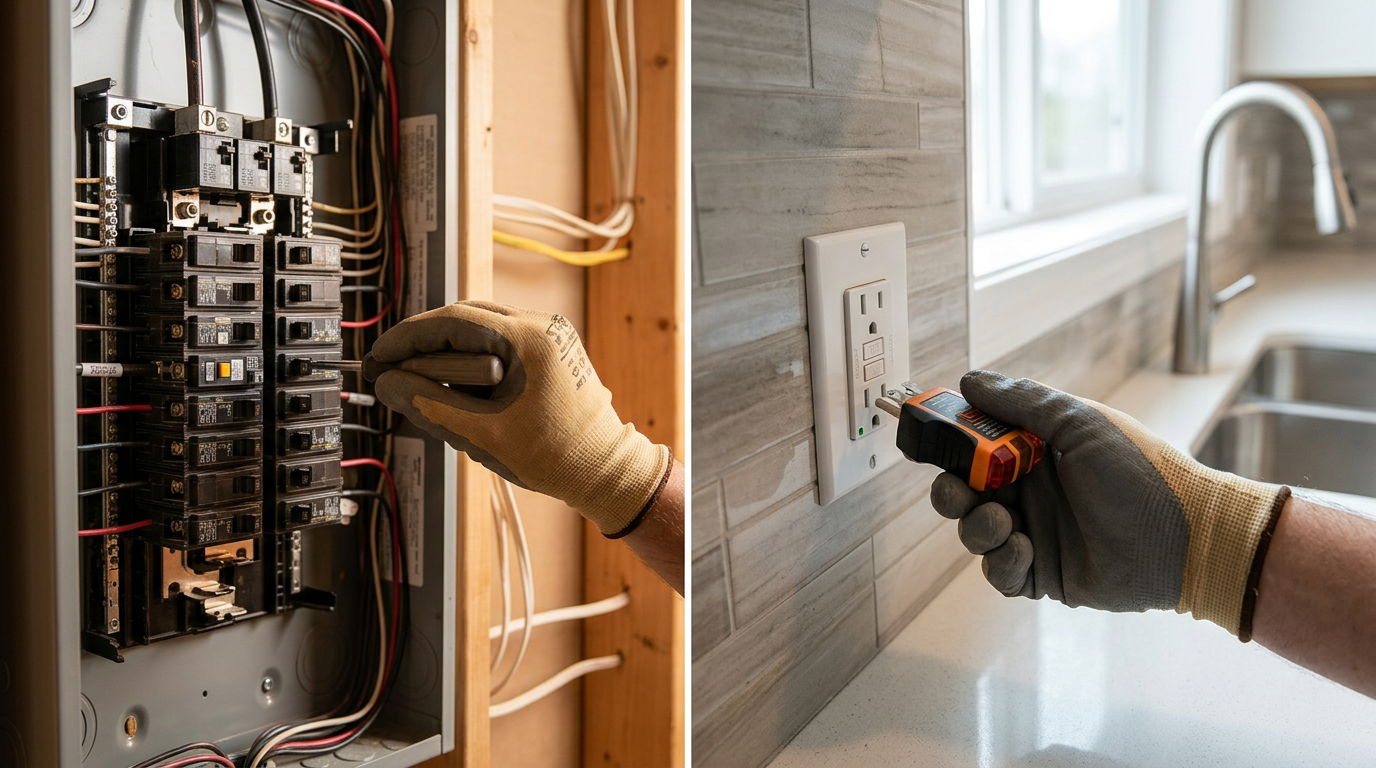
- GFCI Protection = Protects PEOPLE from Shock & Electrocution: GFCI devices continuously monitor the balance of electricity flowing between the hot and neutral wires. If current leaks out of its intended path (for example, into a basin of water or through a person holding a faulty tool), the GFCI cuts power in as little as 1/40th of a second.
- AFCI Protection = Protects YOUR HOME from Electrical Fires: AFCI devices monitor electrical waveforms for erratic arcing patterns: unintentional electrical sparks jumping across loose wire connections or pierced drywall screws. Arcing produces intense thermal heat (up to 10,000°F) that can ignite surrounding wood framing without drawing enough amperage to trip a standard circuit breaker.
Where Each Device Belongs (NEC Code Overview)
|
GFCI (Ground Fault) |
AFCI (Arc Fault) |
Dual-Function (AFCI/GFCI) |
|
Fatal Electric Shock |
Structural Electrical Fires |
Shocks + Electrical Fires |
|
Wet/Damp zones (Kitchens, Baths, Outdoors) |
Living & Sleeping spaces (Bedrooms, Dens) |
Kitchen & Laundry circuits |
|
Wall Outlets & Breakers |
Panel Breakers & Outlets |
Combination Panel Breakers |
Nuisance Tripping: What’s Normal vs. Abnormal?
Modern smart AFCI/GFCI breakers use electronic sensors. Occasionally, you may experience nuisance tripping:
- Normal Nuisance Tripping: Plugging in cheap power tools, treadmills, or old vacuum cleaners with sparking brush motors can trigger AFCI sensors.
- Abnormal Tripping: A breaker that trips consistently when no appliances are operating indicates a loose wire termination, damaged wire insulation, or neutral wire crossing inside your electrical box.
A Comprehensive Home Safety Approach
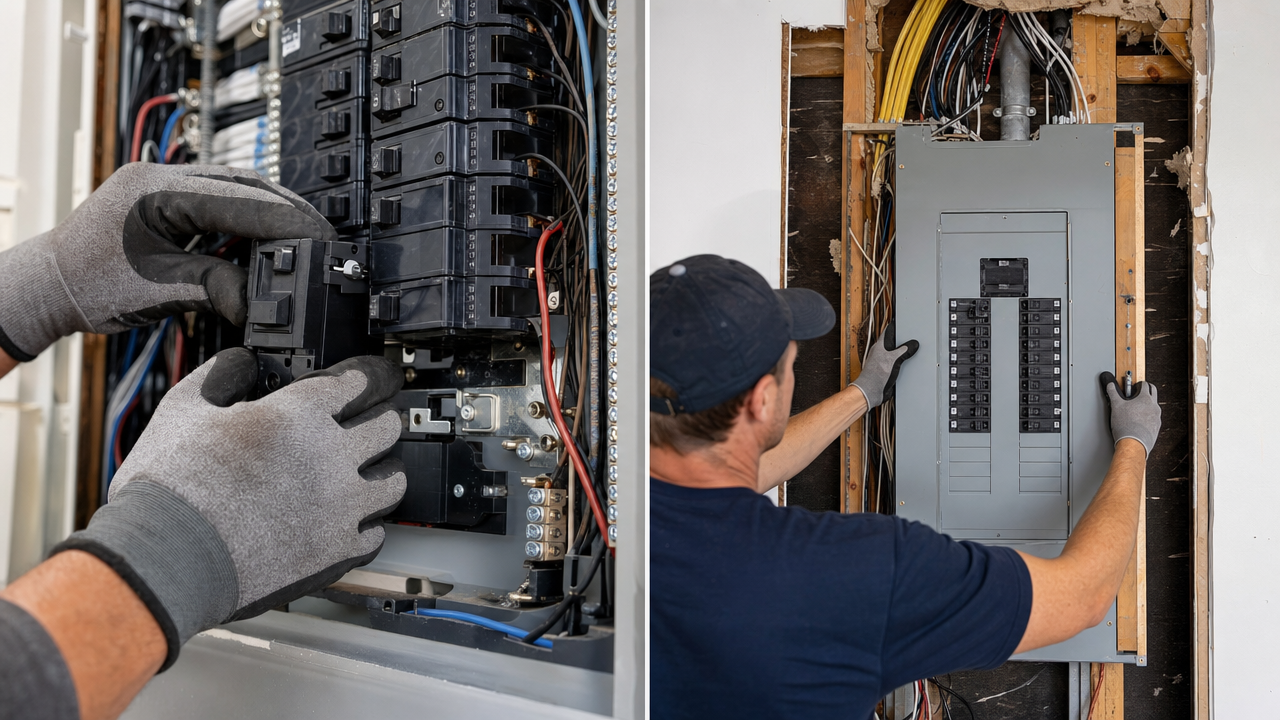
Rather than viewing safety devices as single, isolated upgrades, Speck Family Electric recommends a comprehensive home electrical safety audit. Replacing outdated standard breakers with dual-function AFCI/GFCI breaker protection provides maximum electrical shock and fire defense across every circuit in your home.
Frequently Asked Questions
- Which device is required vs. recommended? Both are strict requirements under modern Tennessee electrical codes for new construction and panel modifications. GFCI is required in wet areas, while AFCI is mandatory in living areas.
- Can both AFCI and GFCI protection be installed together? Yes. Electrical panel manufacturers produce Dual-Function (DF) circuit breakers that offer complete AFCI and GFCI protection within a single panel unit.
- Why does my GFCI outlet trip when I turn on a blender or hairdryer? High-draw appliance motors with worn internal carbon brushes or moisture buildup inside appliance housings cause small ground leaks that instantly trip sensitive GFCI circuits.
Want us to take a look? Request an Electrical Appointment and Speck Family Electric will help you get to safe, reliable power.
Share this article
Follow us
Latest articles
October 23, 2026

October 9, 2026
September 25, 2026

September 9, 2026