
Surge Protection Failure Warning Signs
Covered In This Article:
Request an Electrical Appointment. If you are dealing with any electrical issues, do not wait. Small electrical problems can turn into safety risks. Speck Family Electric makes it simple to get a fast, professional inspection. Fully licensed and insured with customer-first service and straightforward next steps.
How to Tell If Your Whole-House Surge Protection Is Failing (Warning Signs)
Whole-house surge protection is one of the most effective safety upgrades you can add to your electrical panel. However, many homeowners make the dangerous assumption that once installed, a surge protector lasts indefinitely. This is not the case. In reality, surge protective devices (SPDs) are designed to absorb electrical sacrifice. Every time they divert excess voltage away from your home, their internal components wear down until the device can no longer defend your electrical grid.
The Silent Failure Problem
The biggest challenge with failing surge protection is that it rarely announces its end with smoke or loud noises. Most SPDs fail silently while electricity continues flowing to your outlets completely uninterrupted. You might assume your home is fully guarded, when in fact your appliances are exposed to every grid spike and storm surge.
Warning Signs to Watch For
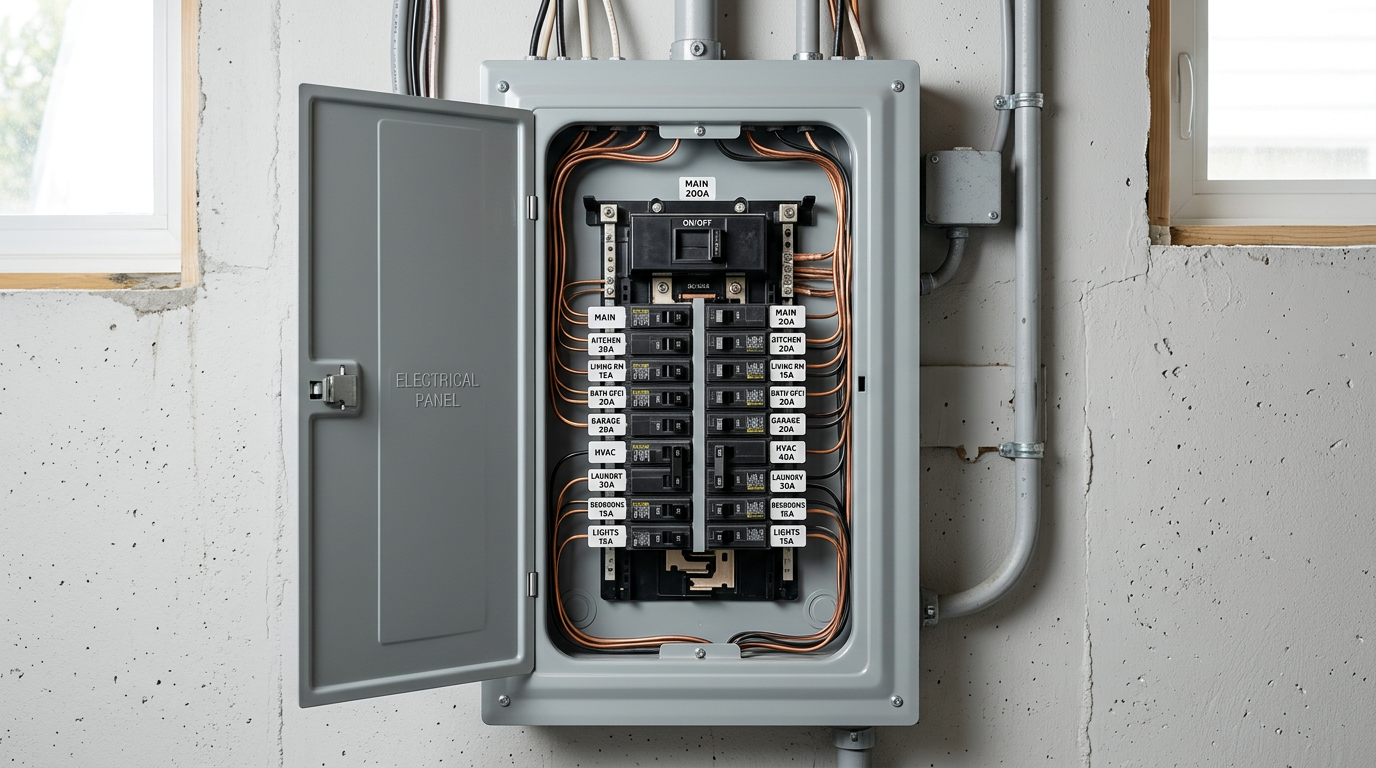
- Indicator Light Status Has Changed: Most quality panel-mounted SPDs feature green or red LED indicator lights. A dark light, a flashing red signal, or an audible alarm beep signifies that internal Metal Oxide Varistors (MOVs) have degraded and protection is inactive.
- Recent Severe Storm or Grid Incident: If your neighborhood experienced a severe thunderstorm with nearby lightning, a transformer explosion, or a sudden power restoration surge, your SPD likely absorbed a massive hit and needs inspection.
- Age Beyond 3 to 5 Years: Even without major storm hits, absorbing daily internal grid spikes gradually degrades MOVs over a 3- to 5-year period.
- Tripped Surge Breaker: Panel-mounted surge protectors connect to a dedicated two-pole circuit breaker. If that dedicated breaker trips repeatedly, the surge device has likely reached end-of-life short-circuit protection.
Testing vs. Troubleshooting (What’s Safe for Homeowners)
What Homeowners CAN Safely Do:
- Conduct a routine visual inspection of the surge protector enclosure.
- Check the LED status lights monthly (Green = Active, Red/Off = Replace).
- Check if the dedicated breaker supplying the surge unit has tripped.
What Homeowners Should NEVER Do:
- Never remove the main panel cover to touch surge device wiring.
- Never attempt to multimeter-test high-voltage panel terminals without proper personal protective equipment (PPE).
What Speck Family Electric Checks During an Inspection
During a comprehensive electrical maintenance check, our licensed electricians:
- Measure clamp voltage and line voltage feeding the SPD.
- Verify proper wire torque and check for signs of thermal stress on neutral and ground connections.
- Inspect overall panel health to ensure grounding resistance meets National Electrical Code standards.
Frequently Asked Questions
- Can I just replace the surge device myself? Because whole-house surge units are hardwired directly into your main electrical panel bus bars, DIY replacement presents extreme shock and arc flash hazards. Replacement should always be handled by a licensed electrician.
- How often should my surge protection be checked? We recommend checking the indicator lights monthly and having a licensed electrician inspect the unit during your annual electrical maintenance check.
- What should I do immediately after a power event? After a major power outage or thunderstorm, check your panel’s surge protector LED lights. If red or unlit, schedule a replacement inspection promptly before the next storm cycle.
Share this article
Follow us
Latest articles
October 23, 2026
October 9, 2026
September 25, 2026
September 9, 2026