Whole-House Surge Protection: What It Protects
Covered In This Article:
Request an Electrical Appointment. If you are dealing with any electrical issues, do not wait. Small electrical problems can quickly turn into safety risks. Speck Family Electric makes it simple to get a fast, professional inspection. Fully licensed and insured with customer-first service and straightforward next steps.
When most homeowners in Sparta and Middle Tennessee think about power surges, they picture a sudden lightning bolt striking a power line during a severe thunderstorm. While lightning certainly causes dramatic electrical spikes, over 80% of power surges actually originate inside your own home.
Every time your HVAC compressor kicks on, your refrigerator cycles, or heavy equipment runs nearby, small voltage spikes ripple through your electrical wiring. Without whole-house surge protection, these repeated mini-surges act like silent wear-and-tear on sensitive electronics, shortening their lifespan and risking costly equipment failure.
What a Surge Is (and Why It Matters to Your Electronics)
An electrical surge is a transient spike in voltage that significantly exceeds the standard 120-volt flow entering your home. While electrical systems are built to handle minor fluctuations, sudden jumps of hundreds or thousands of volts force excess current through delicate microchips and circuit boards.
Modern homes contain thousands of dollars in sensitive digital technology, including smart refrigerators, modern HVAC control boards, flat-screen TVs, EV chargers, and gaming consoles. Unchecked surges can instantly destroy these devices or degrade their components over time until they fail without explanation.
What Whole-House Surge Protection DOES Protect
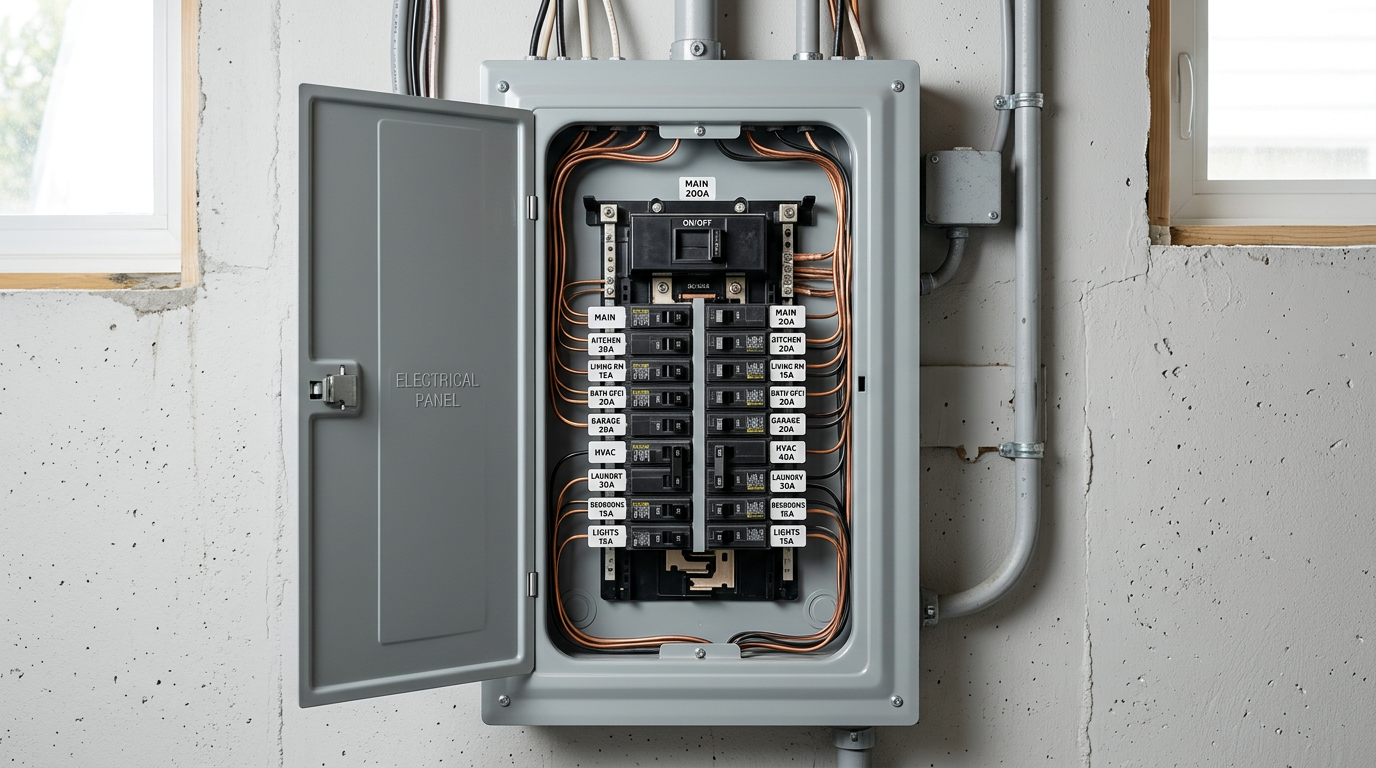
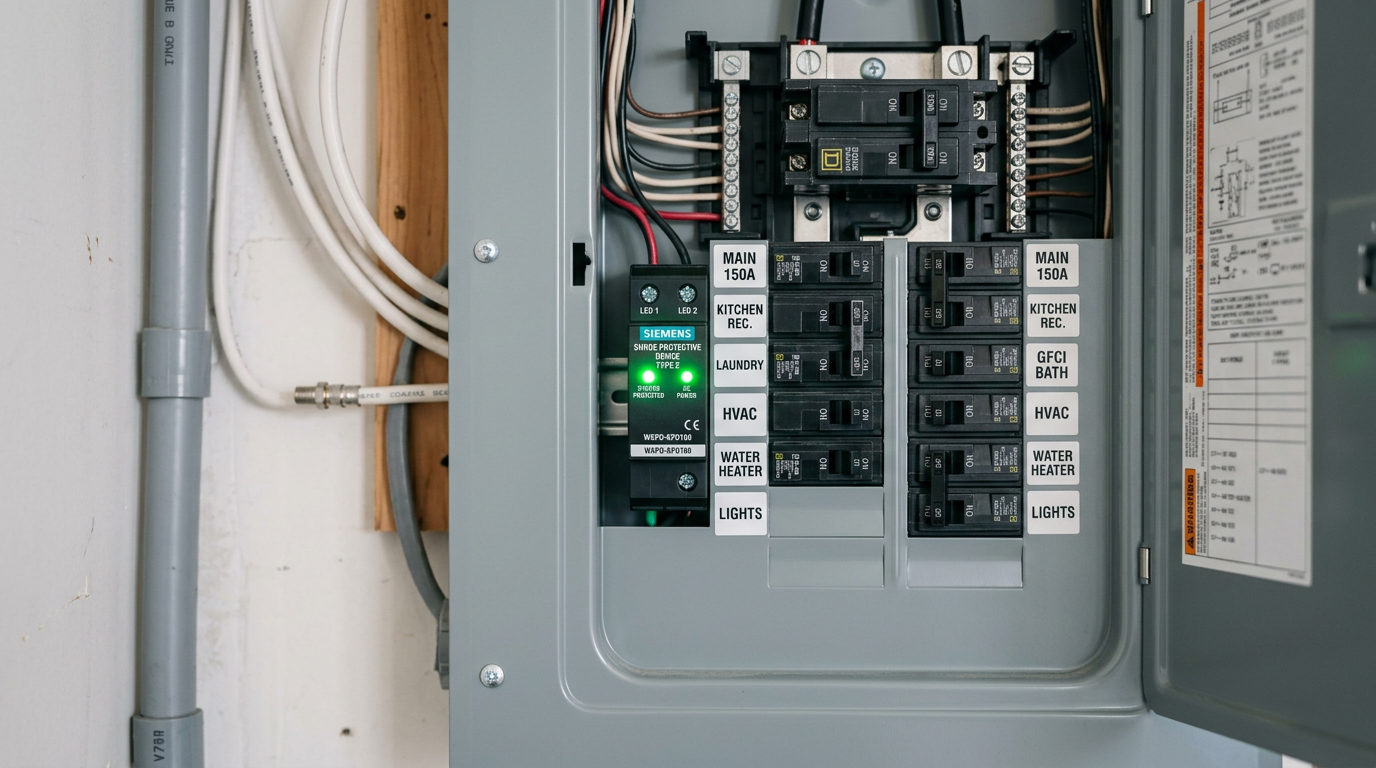
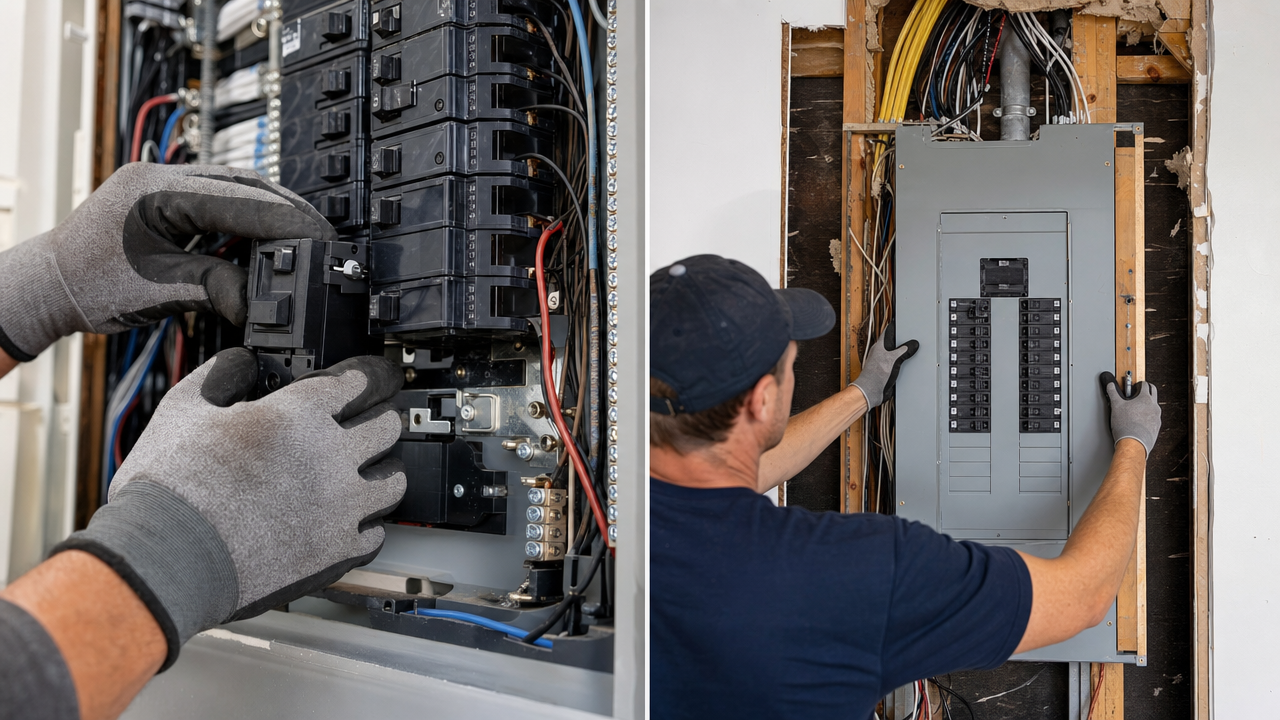
A professionally installed whole-home surge protective device (SPD) acts as an invisible shield mounted directly at your main electrical panel. When a voltage spike hits your system, the SPD detects the excess electricity in microseconds and safely diverts it into the ground wire before it reaches your living space.
| Protected Equipment Category | Examples of Covered Devices |
| Major Home Appliances | Refrigerators, washing machines, dryers, dishwashers, microwave ovens |
| HVAC & Climate Systems | Central AC units, heat pumps, smart thermostats, furnace control boards |
| Home Electronics & Tech | Smart TVs, computers, Wi-Fi routers, sound systems, gaming consoles |
| Hardwired Infrastructure | LED lighting fixtures, smart switches, security systems, garage door openers |
By stopping voltage spikes at the main panel, whole-house protection guards all hardwired appliances and standard outlets across your entire property.
What It Doesn’t Protect (Setting Clear Expectations)
While whole-home surge protection is the foundation of electrical defense, it is important to understand its boundaries:
- Direct Lightning Strikes: If lightning strikes your home’s roof or service mast directly, millions of volts can bypass protection due to sheer energy volume. However, whole-house SPDs handle indirect strikes nearby with ease.
- Internal Downstream Spikes: A minor spike created inside a specific branch circuit (such as a vacuum plugging into a worn outlet) can travel along that single line before reaching the panel.
- Plugs & Wires Downstream: Damaged cord sets or frayed wiring inside an old appliance will not be cured by panel surge protection.
Pro Tip: For maximum defense, we recommend a two-tiered strategy: a whole-house SPD at the panel combined with quality point-of-use power strips for highly sensitive electronics like high-end computers or entertainment centers.
Who Should Consider Whole-House Surge Protection?
You should strongly consider installing whole-home surge defense if:
- You live in Middle Tennessee regions prone to seasonal lightning storms (Sparta, Cookeville, Crossville).
- You have recently upgraded appliances, HVAC systems, or installed a home EV charger.
- Your home contains high-value electronics or smart home automation.
- You live in an older home with sensitive electrical panel components.
Why Professional Installation Matters
Installing a whole-house surge protector involves working directly inside your main electrical panel alongside high-voltage utility lines. A licensed electrician ensures:
- Proper unit sizing matched to your electrical service amperage (100A, 200A, or 400A).
- Safe, code-compliant connection to your panel’s neutral and ground bars.
- Verifiable status indicator lights so you know the unit is actively operating.
Frequently Asked Questions
- How long does a whole-house surge protector last?[Text Wrapping Break]Most quality whole-house surge protectors last between 3 to 5 years, or through a designated cumulative amount of electrical energy (measured in joules). Many units feature status indicator lights that show when internal protection needs replacement.
- Does it protect against lightning?[Text Wrapping Break]It protects against indirect lightning strikes (strikes to nearby utility lines or transformers). No surge device can completely absorb a direct lightning hit to the home itself, but whole-house protection dramatically reduces overall lightning-related risk.
- Will it help with TVs, computers, and garage door openers?[Text Wrapping Break]Yes. Whole-house protection shields all hardwired circuits and standard wall outlets, extending crucial protection to sensitive garage door circuit boards, entertainment electronics, and home computing gear.
- Do I still need point-of-use surge protectors?[Text Wrapping Break]Yes, for ultimate protection. Pairing a whole-panel surge device with quality wall outlet surge strips creates a layered defense system (Class 1 + Class 2 protection) for delicate electronics.
Want us to take a look? Request an Electrical Appointment and Speck Family Electric will help you get to safe, reliable power.
Share this article
Follow us
Latest articles
September 25, 2026

September 9, 2026
August 13, 2026